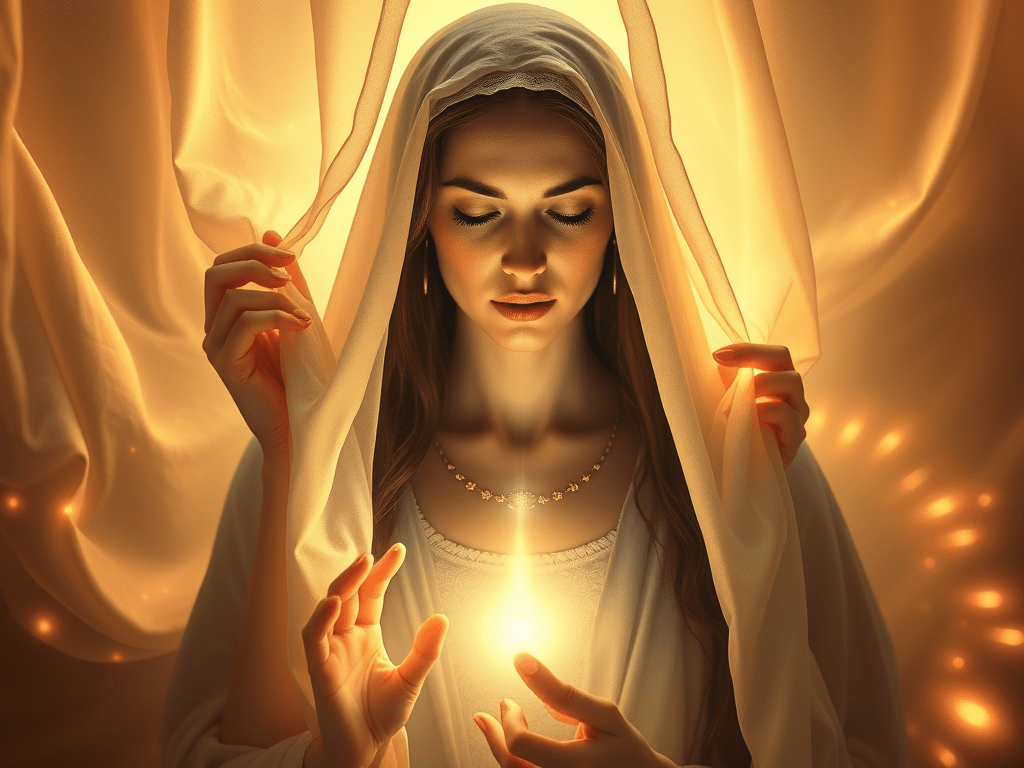
Mary Magdalene has long been one of the most misunderstood figures in Christian history. The canonical gospels tell us she was a devoted disciple of Jesus, present at both his crucifixion and resurrection, and yet she has been mischaracterized for centuries as immoral or sinful. A single line in Luke 8:2 and Mark 16:9 notes that Jesus cast “seven demons” out of her — a phrase that later interpreters used to stain her reputation.
But what if those seven demons were never about immorality at all? What if they were symbolic of something deeper: the inner struggles, wounds, and illusions that bind the human soul?
In the Gospel of Mary, a gnostic text preserved in fragments, Mary speaks of the soul’s ascent through seven “powers” or veils that keep it imprisoned. And when we place this beside the wisdom of Eastern traditions — the seven chakras — we begin to see a remarkable pattern. Across cultures, the human journey of healing and awakening is mapped through seven layers.
Mary’s story, then, is not one of shame, but of transformation. She becomes a model of the healed and liberated soul.
The Canonical “Seven Demons”
The gospels never name Mary Magdalene’s “seven demons.” They could have referred to illness, psychological torment, or spiritual oppression. In Jewish tradition, the number seven symbolized completeness — suggesting she was fully bound, fully afflicted.
Rather than read this as a statement of sin, we might instead see it as a poetic way of saying she was entirely overwhelmed by suffering. Jesus’ act of “casting them out” was less about removing evil and more about restoring her wholeness.
The Seven Powers in the Gospel of Mary
In the Gospel of Mary Magdalene, Mary describes the soul’s ascent after death, passing through seven powers or veils that hold it down:
- Darkness – the shadow that blinds us to truth.
- Craving – the pull of insatiable desire.
- Ignorance – not knowing who we are.
- Craving for death – despair, the urge to give up.
- Fleshly kingdom – the seduction of domination and power.
- Foolish wisdom – false knowledge that masquerades as truth.
- Wrathful wisdom – the distortion of spirit into judgment and violence.
Each of these “powers” is like a veil the soul must push through to be free. They are not external enemies, but inner obstacles: fears, cravings, and false identities that must be seen and released.
The Seven Chakras: A Universal Map of Transformation
In Hindu and Buddhist traditions, the human body contains seven chakras — centers of energy aligned with stages of consciousness. They chart the same inner journey Mary describes:
- Root (Muladhara) – survival, fear, grounding.
- Sacral (Svadhisthana) – desire, craving, pleasure.
- Solar Plexus (Manipura) – ego, power, control.
- Heart (Anahata) – love, compassion, despair when blocked.
- Throat (Vishuddha) – truth, communication, freedom from false wisdom.
- Third Eye (Ajna) – perception, clarity, vision.
- Crown (Sahasrara) – union with divine spirit, liberation.
The parallels are striking. Where Mary speaks of darkness, craving, ignorance, despair, and distorted wisdom, the chakras speak of blockages in grounding, desire, ego, heart, voice, vision, and spirit. Both traditions map a path of rising — moving from survival and bondage toward liberation and divine union.
Parallels Across Traditions
| Demons (Canonical Gospels) | Veils/Powers (Mary’s Gospel) | Chakras (Eastern Wisdom) | Theme of Healing |
| Fragmentation of self | Darkness | Root | Overcoming fear, grounding in safety |
| Compulsions, unrest | Craving | Sacral | Releasing unhealthy desires |
| Confusion, blindness | Ignorance | Solar Plexus | Transcending ego and false identity |
| Despair, hopelessness | Craving for death | Heart | Opening to compassion and hope |
| Domination, false power | Fleshly kingdom | Throat | Choosing truth over control |
| False beliefs | Foolish wisdom | Third Eye | Seeing clearly, wisdom beyond illusion |
| Distorted spirit | Wrathful wisdom | Crown | Awakening into divine light |
Mary Magdalene as the Healed Soul
Seen in this light, Mary’s “seven demons” become not a condemnation but a mirror of the human condition. We all carry fear, craving, ignorance, despair, and distortion. We all need healing, integration, and awakening.
Mary’s liberation, then, was not simply a personal miracle. It made her a living symbol of the soul made whole — a woman who moved through all seven veils and emerged as a teacher in her own right. In fact, the Gospel of Mary presents her as one who understands Jesus’ message more deeply than some of the male disciples, emphasizing inner authority and spiritual freedom.
The Path of Healing and Awakening
For us today, these three traditions — canonical scripture, the Gospel of Mary, and the chakra system — converge into a spiritual practice:
- Acknowledge the demons — name your fears, cravings, and illusions honestly.
- Pass through the veils — don’t fight shadows, but see them clearly until they dissolve.
- Awaken the chakras — cultivate practices of grounding, compassion, truth, and union with the divine.
In this process, Mary Magdalene becomes not a figure of shame but a guide. She reminds us that the soul’s journey is not about moral purity but about integration — healing the fractures within us until we remember our wholeness.
Conclusion: Rising With Mary
When Jesus cast out Mary’s seven demons, he restored her to herself. When Mary spoke of seven powers, she was naming the illusions we all must release. When Eastern wisdom mapped the seven chakras, it gave us another lens for the same truth: that liberation comes in layers.
The number seven is no accident. It speaks to completeness, to the fullness of the soul’s journey. And Mary’s story tells us that this path is not reserved for saints or mystics. It belongs to all of us.
May we, like Mary, face our demons, pass through our veils, and rise into the fullness of divine light.

Leave a comment